


The Rising Importance of Heat Pumps in Commercial HVAC
Introduction
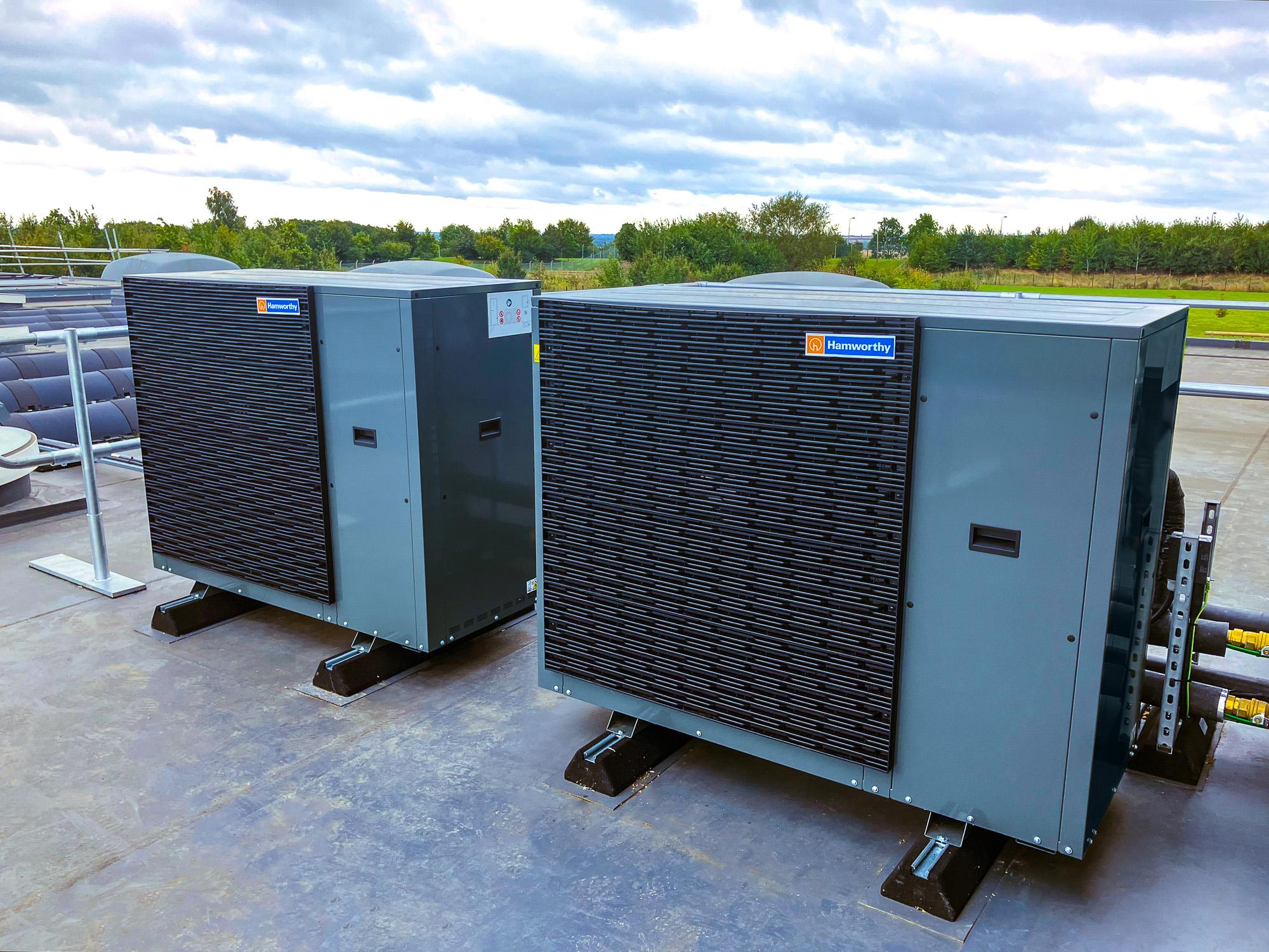
The Commercial Heat Pump Market is rapidly expanding as businesses, institutions, and industrial facilities transition toward energy-efficient and environmentally friendly heating and cooling solutions. Commercial heat pumps operate by transferring heat rather than generating it, significantly reducing energy consumption compared to traditional HVAC systems. With rising emphasis on sustainability, carbon reduction, and operational cost savings, heat pumps are becoming the preferred choice for offices, hotels, hospitals, schools, data centers, and retail establishments. Technological advancements in variable speed compressors, smart controls, and low-GWP refrigerants are further improving system performance and environmental impact. As global climate regulations tighten and renewable energy integration accelerates, the commercial heat pump market is positioned for strong long-term growth.
Market Drivers
Growing demand for low-carbon heating and cooling solutions is a major driver for the market. Governments worldwide are introducing incentives, tax benefits, and regulations encouraging the adoption of high-efficiency heat pump systems. Increasing construction of commercial buildings and modernization of old HVAC infrastructure support broader implementation. Advances in air-source, water-source, and ground-source heat pumps expand usability across various climatic conditions. Rising operational costs for traditional heating systems and commercial electricity savings further enhance heat pump adoption. The push for green building certifications such as LEED also contributes significantly to market growth.
Market Challenges
High initial installation costs remain a major challenge, particularly for ground-source heat pump systems. Performance limitations in extremely cold climates may reduce efficiency without hybrid system support. Retrofitting older commercial buildings can be difficult due to space constraints or incompatible ducting infrastructure. Limited awareness of long-term cost savings slows adoption in certain regions. Supply chain issues involving refrigerant materials and advanced components may affect system availability. Additionally, regulatory changes related to refrigerants can require system redesigns or costly upgrades.
Market Opportunities
Significant opportunities lie in the development of next-generation heat pumps using ultra-low-GWP refrigerants and advanced inverter technologies. Integration with solar energy, thermal storage, and smart building management systems enhances efficiency and performance. Data centers, hospitals, and large commercial complexes increasingly adopt heat pumps for sustainable temperature control. Rapid urbanization in emerging markets presents substantial installation potential. Hybrid heat pump systems combining renewable energy sources offer strong opportunities for achieving net-zero building targets. Government funding and decarbonization initiatives create new pathways for market expansion.
Regional Insights
Europe leads the Commercial Heat Pump Market due to strong climate policies, carbon reduction targets, and widespread adoption in commercial buildings. North America shows robust growth driven by energy-efficient building codes and rising adoption in retail, hospitality, and institutional sectors. Asia-Pacific is experiencing rapid expansion due to large construction activities, increasing urbanization, and government sustainability initiatives in China, Japan, South Korea, and India. The Middle East is adopting heat pumps for high-efficiency cooling, while Latin America and Africa show emerging demand as commercial infrastructure grows.
Future Outlook
The future of the Commercial Heat Pump Market is shaped by digitalization, decarbonization, and widespread adoption of renewable-powered HVAC solutions. Smart heat pumps equipped with AI-based optimization, remote monitoring, and adaptive climate control will become increasingly common. Integration with microgrids, energy storage systems, and sustainable building frameworks will accelerate adoption. Technological advancements will improve performance in extreme climates, expanding global applicability. As businesses pursue net-zero goals and energy efficiency becomes essential, the commercial heat pump market will continue to grow significantly.
Conclusion
Commercial heat pumps are becoming a key component of modern HVAC systems, offering high energy efficiency, reduced carbon emissions, and substantial long-term cost savings. Despite challenges involving cost, installation complexity, and climatic limitations, growing sustainability initiatives and technological advancements continue to drive adoption. Smart controls, renewable integration, and low-GWP refrigerants will reshape future product designs. As global demand for eco-friendly commercial infrastructure rises, heat pumps will play a central role in meeting energy efficiency and climate goals across sectors.

 English
 Arabic
 Spanish
 Portuguese
 Deutsch
 Turkish
 Dutch
Dutch
 Italiano
 Russian
 Romaian
 Portuguese (Brazil)
 Greek
Greek