


The Future of Power Safety: Exploring Fault Current Limiter Innovations
Introduction
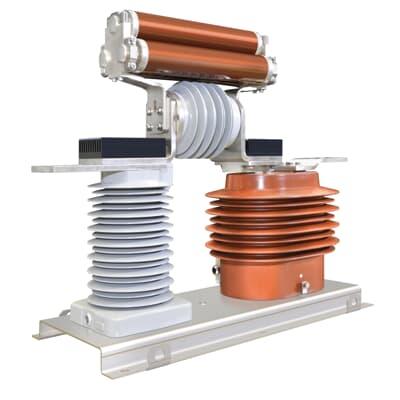
The Fault Current Limiter (FCL) Market plays a crucial role in modern electrical grid stability by managing and mitigating excessive fault currents. As global power demand grows and grids become more interconnected, the risk of short circuits and equipment damage rises significantly. Fault current limiters provide a vital safety mechanism that enhances system reliability, protects valuable infrastructure, and enables integration of renewable and distributed energy sources. The rapid expansion of transmission and distribution networks, coupled with increased renewable installations and urban electrification, is propelling the global FCL market forward. With technological innovation and growing adoption across industrial, commercial, and utility sectors, the Fault Current Limiter Market is emerging as a cornerstone of resilient and smart grid development worldwide.
Market Drivers
The primary driver of the Fault Current Limiter Market is the rising demand for grid stability and protection in the face of increasing electricity consumption and distributed generation. Traditional circuit breakers and protective devices often struggle to handle sudden surges in current without causing power interruptions or damage. FCLs address this challenge by instantaneously limiting fault currents to manageable levels. Additionally, the global energy transition toward renewable power sources such as wind and solar has made grid systems more complex and vulnerable to fluctuations. FCLs facilitate smoother integration of renewables by managing unpredictable surges and preventing cascading failures. The modernization of aging grid infrastructure, especially in developed economies, along with electrification of transportation and industrial automation, further accelerates adoption. Governments’ focus on energy security and infrastructure resilience is also stimulating market growth through supportive policies and funding programs.
Market Challenges
Despite strong growth potential, the Fault Current Limiter Market faces several challenges that could hinder widespread adoption. The high initial cost of installation and maintenance remains a significant barrier, particularly for utilities in developing regions. Many utilities rely on conventional protective systems, and the transition to FCL-based solutions requires significant investment in upgrading grid infrastructure. Furthermore, technological complexity and limited awareness about the advantages of FCLs among end-users pose hurdles. Another major challenge is the lack of standardized regulations and interoperability across different technologies such as superconducting, solid-state, and hybrid FCLs. Each technology has its operational limitations, affecting scalability and cost-effectiveness. Lastly, supply chain disruptions and fluctuations in raw material costs, especially for superconducting materials, impact the production and deployment of FCL systems globally.
Market Opportunities
The growing demand for smart grid technologies and the global push for renewable integration offer vast opportunities for the Fault Current Limiter Market. As nations upgrade their transmission and distribution systems, FCLs are being recognized as essential components for grid modernization projects. The adoption of superconducting FCLs is expected to rise sharply due to their ability to handle large fault currents with minimal power losses and compact design. Emerging economies in Asia-Pacific, Latin America, and the Middle East are investing heavily in grid expansion, creating new avenues for market players. Furthermore, the increasing focus on industrial power quality and equipment protection provides opportunities for FCL deployment across sectors such as manufacturing, oil & gas, and transportation. Integration of FCLs with advanced digital monitoring and automation systems will also open new possibilities for predictive maintenance and energy optimization.
Regional Insights
Regionally, North America and Europe lead the global Fault Current Limiter Market due to extensive grid modernization initiatives and strong regulatory frameworks supporting energy infrastructure upgrades. In the United States, utilities are incorporating FCLs to support renewable integration and ensure uninterrupted power supply in urban centers. Europe’s focus on decarbonization and smart energy transition is driving adoption, particularly in countries like Germany, the UK, and France. The Asia-Pacific region is witnessing the fastest growth, fueled by massive power infrastructure investments in China, India, and Japan. Rapid urbanization, industrialization, and renewable energy expansion are creating enormous demand for efficient fault management technologies. The Middle East and Africa are also emerging markets, driven by growing renewable projects and investments in electricity distribution networks. Latin America, with increasing renewable integration and power transmission upgrades, presents additional growth prospects for global FCL manufacturers.
Future Outlook
The future of the Fault Current Limiter Market looks highly promising as power systems become increasingly complex and decentralized. The integration of advanced superconducting materials and solid-state technologies is expected to enhance the performance, efficiency, and compactness of FCLs. As renewable energy capacity continues to surge, demand for dynamic grid protection systems will escalate. Market players are focusing on research and development to bring down costs and improve reliability, making FCLs more accessible to utilities and industries. Strategic collaborations between technology providers, grid operators, and government bodies will play a pivotal role in accelerating adoption. In the long term, the emergence of digitalized and AI-integrated FCL systems could revolutionize grid fault management, enabling predictive response and self-healing capabilities. By 2032, the global market is expected to experience sustained double-digit growth, driven by urban electrification, smart grid deployment, and the transition toward carbon-neutral power systems.
Conclusion
In conclusion, the Fault Current Limiter Market stands as a critical enabler of next-generation power grid resilience and safety. As global power systems evolve, FCLs will continue to play an indispensable role in maintaining stability, minimizing outages, and protecting valuable infrastructure. With advancements in superconducting and solid-state technologies, along with increasing government and private sector investment, the market is on a strong trajectory for growth. Companies that focus on innovation, cost optimization, and integration with digital grid platforms will likely dominate this evolving landscape. The continued expansion of renewable energy, smart cities, and industrial electrification ensures a bright and dynamic future for the Fault Current Limiter Market.

 English
 French
 Spanish
 Portuguese
 Deutsch
 Turkish
 Dutch
Dutch
 Italiano
 Russian
 Romaian
 Portuguese (Brazil)
 Greek
Greek