


From Sugarcane to Sustainable Fuel: Latin America’s Biofuel Story
Introduction
The Latin America Biofuels Market encompasses production, blending, distribution, and consumption of biofuels such as ethanol, biodiesel, and advanced biofuels across countries including Brazil, Argentina, Colombia, and others in Central America and the Caribbean. Rooted in abundant agricultural feedstocks (sugarcane, soybean, palm, cassava) and decades of biofuel policy experience, the region is a global leader—most notably Brazil, which pioneered large-scale sugarcane ethanol and flexible-fuel vehicles. Latin America’s biofuels sector addresses energy security, rural development, and greenhouse gas reduction goals while creating export opportunities and supporting agricultural value chains. The market’s trajectory is shaped by policy frameworks, commodity cycles, technology adoption, and international demand for low-carbon fuels.
Market Drivers
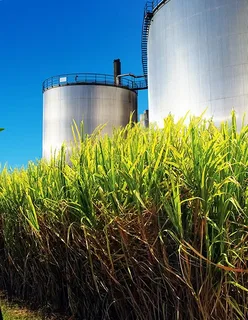
Key drivers of the Latin America biofuels market include strong feedstock endowments and established agro-industrial infrastructure. Brazil’s sugarcane ethanol industry demonstrates high yields per hectare and favorable lifecycle emissions, making ethanol cost-competitive and climate-friendly. Rising energy security concerns and dependence on imported fossil fuels encourage countries to expand domestic biofuel production. Supportive government policies—mandated blending rates, fiscal incentives, and research funding—have historically stimulated investment; Brazil’s RenovaBio framework and biodiesel mandates in Argentina and Colombia exemplify regulatory support. The transport sector’s decarbonization push, including commitments by corporate fleets and public procurement of low-carbon fuels, also boosts demand. Finally, expanding export markets for sustainable biofuels and feedstock-derived products create income for producers and attract foreign investment.
Market Challenges
Despite advantages, several challenges constrain expansion. Feedstock sustainability concerns and land-use change risks complicate scaling ambitions; international buyers increasingly demand stringent sustainability certification to avoid indirect deforestation and biodiversity impacts. Commodity price volatility—sugar, soybean, and palm oil—can compress margins for biofuel producers and create feedstock competition between food and fuel. Infrastructure bottlenecks for logistics, storage, and blending, especially outside major producing hubs, hinder distribution and raise costs. Policy inconsistencies across countries, frequent changes in mandate levels, and political uncertainty can undermine investor confidence. Technological gaps in second-generation (cellulosic) and advanced biofuel conversion limit the region’s ability to move beyond conventional ethanol and biodiesel at scale. Finally, social and labor concerns in agricultural supply chains require proactive governance to ensure equitable development.
Market Opportunities
Opportunities abound for growth and modernization. Advanced biofuels—including waste-based biodiesel, hydrotreated vegetable oils (HVO), and cellulosic ethanol—can unlock low-carbon pathways for aviation and heavy transport, where electrification is challenging. Latin America’s large quantities of agricultural residues and potential for energy crops on degraded lands create feedstock options that mitigate competition with food production. Sustainability certification schemes and traceability systems will enable producers to access premium export markets in Europe and Asia that reward low-carbon intensity fuels. Integration of biofuel production with biorefineries—co-producing biochemicals, animal feed, and electricity—can diversify revenue and improve plant economics. Investments in logistics, ports, and inland storage, coupled with blended fuel retail expansion, will increase domestic uptake. Public–private partnerships and blended finance can accelerate deployment of advanced conversion plants and support rural job creation.
Regional Insights
Brazil is the regional powerhouse—dominating ethanol production from sugarcane and demonstrating best-in-class productivity and policy frameworks. Its flexible-fuel vehicle fleet and ethanol distribution network provide a domestic growth foundation and export potential. Argentina has a strong biodiesel industry based on soy, with established export routes, although it faces feedstock export competition and price sensitivity. Colombia and Peru are developing biodiesel and ethanol capacities with targeted mandates to stimulate rural economies. Central American nations pursue niche opportunities, often emphasizing waste-based fuels and small-scale production for local energy security. Mexico shows growing interest in ethanol and bio-based diesel as part of broader fuel policy reforms. Regional trade corridors and MERCOSUR agreements influence cross-border feedstock flows and investment dynamics.
Future Outlook
The Latin America biofuels market is expected to evolve toward diversification and sustainability. Conventional ethanol and biodiesel will remain core but will progressively integrate advanced fuels and waste-derived pathways. Policy frameworks like Brazil’s RenovaBio demonstrate how carbon crediting and decarbonization incentives can mobilize capital and improve lifecycle emissions accounting. Technological adoption—improved fermentation, catalytic upgrading, and HVO pathways—will reduce production costs and widen application to aviation and maritime fuels. International demand for sustainable fuels, combined with carbon pricing mechanisms, can improve export economics. However, scaling responsibly will depend on rigorous land-use governance, social safeguards, and supply chain traceability. Cross-sectoral coupling—linking biofuel production with power, fertilizers, and circular economy initiatives—will strengthen resilience and profitability.
Conclusion
The Latin America Biofuels Market stands at the intersection of agricultural strength, climate ambition, and global low-carbon fuel demand. While Brazil remains the epicenter, opportunities across Argentina, Colombia, and other countries position the region as a strategic supplier of sustainable biofuels. Addressing sustainability, infrastructure, and technology gaps will be crucial to unlocking long-term growth. With smart policies, investment in advanced pathways, and commitment to social and environmental standards, Latin America can expand biofuel production while supporting rural development and contributing meaningfully to global decarbonization.

 English
 Arabic
 French
 Spanish
 Portuguese
 Deutsch
 Turkish
 Dutch
Dutch
 Russian
 Romaian
 Portuguese (Brazil)
 Greek
Greek